
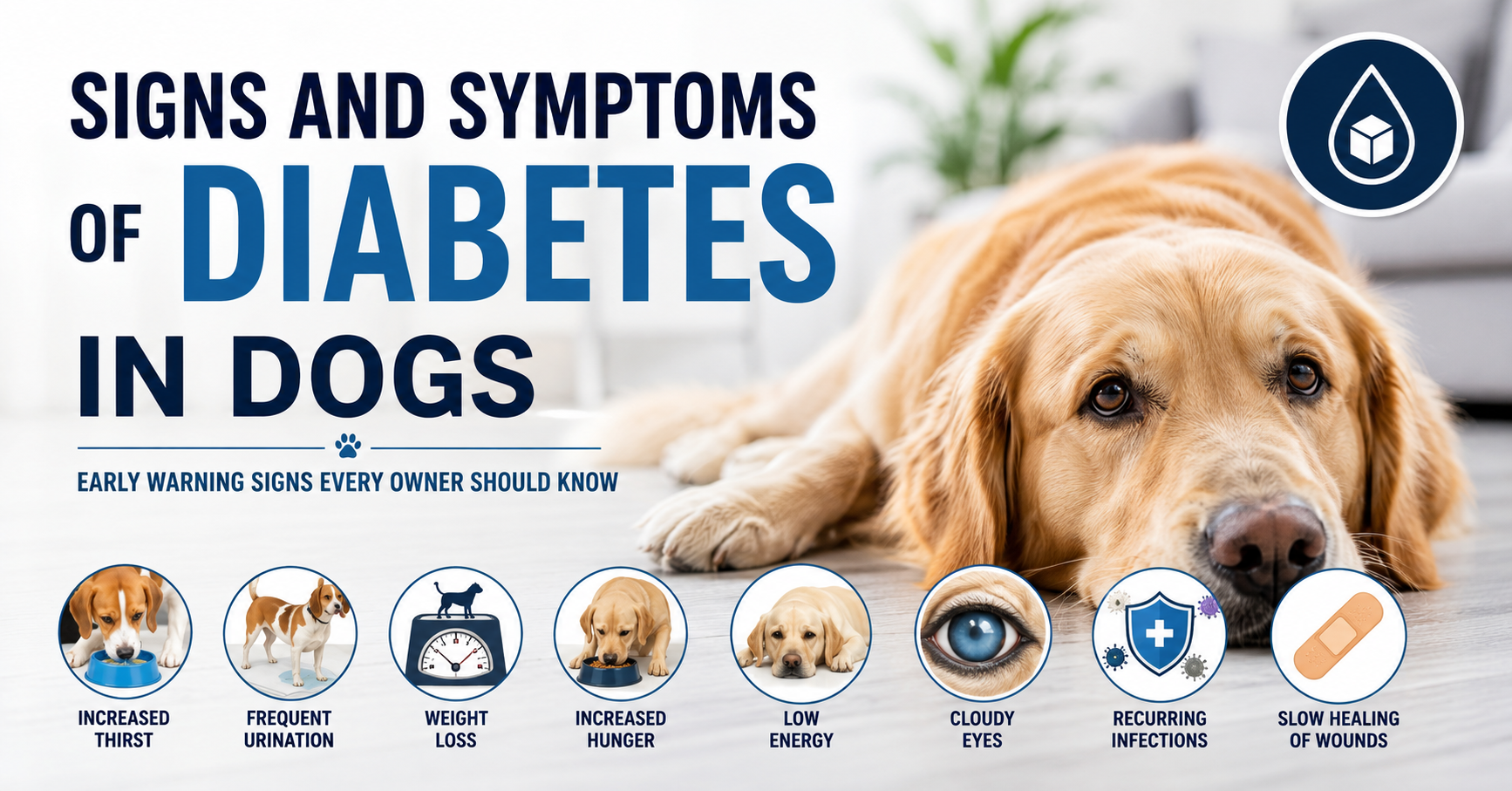
The most common signs and symptoms of diabetes in dogs include increased thirst, frequent urination, weight loss, increased hunger, low energy, cloudy eyes, slow wound healing, and repeated infections. Diabetes happens when a dog’s body cannot properly control blood sugar levels. If left untreated, it can cause blindness, organ damage, serious infections, and even life-threatening emergencies. Early treatment is very important.
What Is Diabetes in Dogs?
Diabetes in dogs is a serious health condition where the body either does not produce enough insulin or cannot use it properly.
Insulin is important because it helps sugar move from the blood into the body’s cells for energy.
Without enough insulin, sugar stays in the bloodstream and causes high blood sugar levels.
Over time, this can damage the eyes, kidneys, nerves, and immune system.
Example: If your dog eats food but still loses weight, drinks a lot of water, and looks weak, diabetes could be the reason.
Early Diabetes in Canines Symptoms to Watch For
Early diabetes in canines symptoms often start slowly, which makes them easy to miss at first. Many dog owners notice small changes like drinking more water, needing more bathroom breaks, or asking for food more often. These early diabetes in canines symptoms can appear weeks or even months before the condition is diagnosed.
One of the most common diabetes in canines symptoms is unexplained weight loss even when appetite stays normal or increases. Some dogs also become less active, sleep more, or seem weaker during walks.
Spotting diabetes in canines symptoms early can help prevent serious complications like cataracts, dehydration, or dangerous blood sugar crashes.
Early Signs and Symptoms of Diabetes in Dogs
Increased Thirst
A diabetic dog usually drinks much more water than normal.
Excessive thirst is one of the earliest diabetes in canines symptoms and is often the first thing owners notice at home.
Example:
If you normally refill the water bowl once a day but now it empties 3–4 times, this could be a warning sign.
Frequent Urination
More drinking means more urination.
You may notice:
- Asking to go outside more often
- Peeing inside the house
- Larger urine amounts
Weight Loss
Even if your dog eats well, it may lose weight because the body starts using fat and muscle for energy.
Increased Hunger
Since glucose cannot enter the cells properly, the dog feels hungry all the time.
Weakness and Low Energy
Your dog may sleep more, avoid playing, or get tired quickly.
Cloudy Eyes
Diabetes often causes cataracts in dogs.
This can make the eyes look white or cloudy.
Cloudy eyes can develop as diabetes progresses and are considered one of the more advanced diabetes in canines symptoms in dogs.
Slow Healing Wounds
If your dog gets a cut or injury and it takes longer to heal, high blood sugar may be affecting healing.
Example:
A small wound that normally heals in 5 to 7 days may take much longer.
Skin Problems
External body signs may include:
- Dry skin
- Hair loss
- Skin infections
- Bad smell from skin
- Red patches
Recurring Ear Infections
Recurring ear infections are common in diabetic dogs.
Sweet or Fruity Breath
This may happen in severe diabetes and can be dangerous.
Advanced Symptoms of Diabetes in Dogs
If diabetes is ignored, symptoms can become serious:
- Vomiting
- Severe weakness
- Dehydration
- Shaking
- Blindness
- Trouble walking
- Fast breathing
- Collapse
This may be a sign of diabetic ketoacidosis, which is an emergency.
What Causes Diabetes in Dogs?
Obesity
Extra body fat increases diabetes risk.
Poor Diet
Too much unhealthy food can increase weight and blood sugar problems.
Age
Dogs between 7–10 years are at higher risk.
Pancreatitis
Damage to the pancreas affects insulin production.
Hormonal Problems
Conditions like Cushing’s disease can increase risk.
Genetics
Some breeds are more likely to get diabetes.
Risk Factors for Diabetes in Dogs
Your dog may have a higher chance if:
- Overweight
- Older age
- Female dog
- Low exercise
- Poor diet
- Family history
- Long-term steroid medicines
Foods That May Increase Diabetes Risk
These foods can cause weight gain and blood sugar problems:
- Too many biscuits
- Sugary treats
- White bread
- Human sweets
- Ice cream
- Fried foods
- Fatty table scraps
Avoid overfeeding.
Foods to Avoid for Diabetic Dogs
Avoid:
- Chocolate
- Candy
- Sugar rich snacks
- High fat foods
- Processed foods
- Too many carbs
Best Foods for Diabetic Dogs
Good foods include:
- High-protein dog food
- High fiber diets
- Lean chicken
- Boiled eggs
- Green beans
- Pumpkin
- Broccoli
- Carrots (small amounts)
Always ask your vet before changing diet.
How Fast Should Diabetes Be Treated?
Treatment should start as soon as possible after diagnosis.
The earlier treatment starts, the better.
If your dog shows symptoms for several days or weeks, do not wait.
Take your dog to the vet quickly.
What Happens If Diabetes Is Left Untreated?
Untreated diabetes can cause:
- Blindness
- Kidney damage
- Liver problems
- Serious infections
- Weight loss
- Muscle weakness
- Diabetic ketoacidosis
- Death in severe cases
This is why fast treatment matters.
How Is Diabetes Diagnosed?
Vets may do:
- Blood sugar test
- Urine test
- Physical exam
- Weight check
- Infection testing
These tests help confirm diabetes.
Treatment for Diabetes in Dogs
Insulin Injections
Most diabetic dogs need daily insulin.
Common insulin types may include:
- Vetsulin
- Humulin N
- Novolin N
Never give insulin without vet advice.
Diet Control
A proper diabetic diet helps control blood sugar.
Regular Exercise
Daily walks help control weight and improve insulin use.
Weight Management
Keeping a healthy weight reduces risk.
Regular Checkups
Blood sugar needs monitoring.
Important Medicine Warning
Do not use human diabetes medicine without talking to a vet.
Wrong medicine or wrong insulin dose can be dangerous.
Always get proper veterinary advice.
How to Care for a Diabetic Dog at Home
- Give insulin on time
- Feed meals at the same time daily
- Keep fresh water available
- Watch for weakness
- Monitor weight
- Check wounds
- Watch for infections
- Keep exercise regular
Consistency is very important.
Can Wounds Heal Slowly in Diabetic Dogs?
Yes, High blood sugar slows healing.
If your dog gets injured:
- Clean the wound
- Keep it dry
- Watch for infection
Small wounds may heal in 1–2 weeks, but diabetic dogs may take longer.
See a vet if healing is slow.
When Should You See a Vet?
See a vet immediately if your dog has:
- Extreme thirst
- Constant urination
- Sudden weight loss
- Weakness
- Vomiting
- Cloudy eyes
- Sweet-smelling breath
- Trouble walking
Do not delay.
Frequently Asked Questions
Q1) What are the first signs of diabetes in dogs?
The first signs are usually increased thirst, frequent urination, increased hunger, and weight loss.
Q2) Can diabetes in dogs be cured?
No, but it can be managed well with insulin, diet, and regular care.
Q3) How long can a dog live with diabetes?
With proper treatment, many dogs live for years.
Q4) What foods should diabetic dogs avoid?
Sugary foods, fatty foods, processed treats, and too many carbohydrates.
Q5) Can diabetes cause skin problems in dogs?
Yes. It can cause dry skin, infections, slow healing, and hair loss.
Q6) What are the earliest diabetes in canines symptoms?
The earliest diabetes in canines symptoms usually include increased thirst, frequent urination, sudden hunger, weight loss, low energy, and sometimes cloudy eyes. Early detection improves treatment outcomes.
Final Thoughts
Diabetes in dogs is serious but manageable if caught early. The sooner you notice the signs and start treatment, the better your dog’s chances of living a healthy life. Watch for changes like excessive thirst, weight loss, cloudy eyes, and slow healing wounds. Never ignore these signs, and always speak with your veterinarian for proper diagnosis and treatment.
Written by Muhammad Abdullah | Zoologist & Founder of YourPetSaver

Zoologist, animal researcher, and founder of YourPetSaver.
5 thoughts on “Signs and Symptoms of Diabetes in Dogs: Causes, Treatment”