
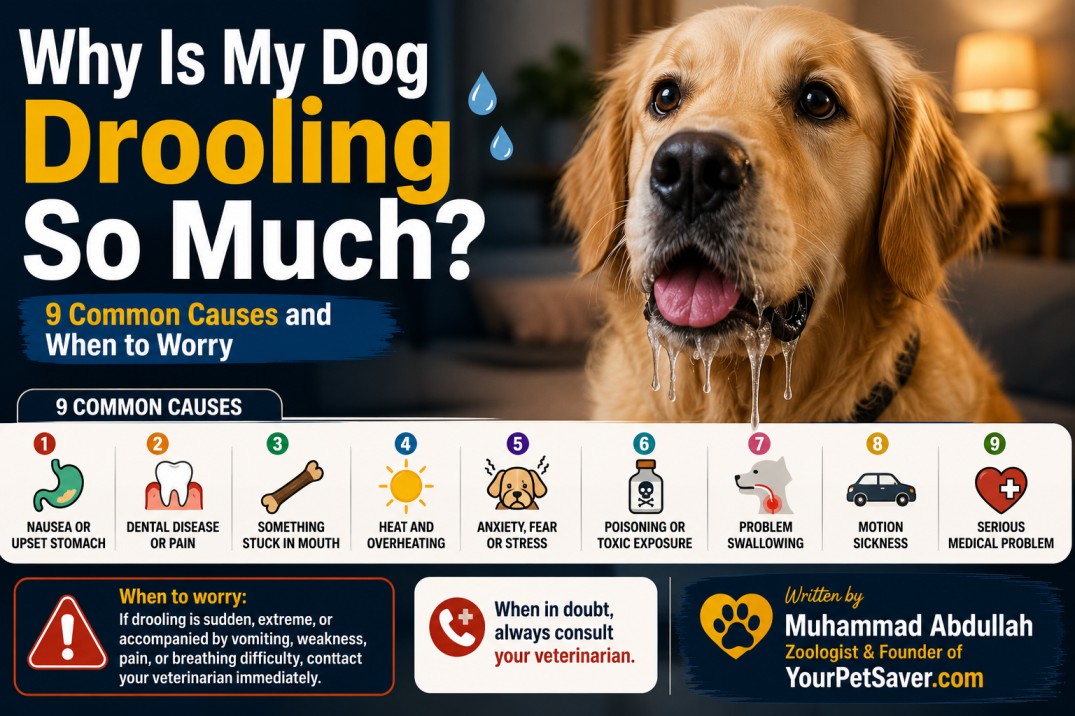
If your dog is drooling more than usual, the cause may be something relatively harmless, such as excitement, anxiety, heat, or nausea. However, excessive drooling can also happen because of dental disease, mouth injuries, something stuck in the mouth, poisoning, stomach problems, or a more serious medical condition. The most important clue is whether the drooling is new for your dog and whether it is happening alongside other symptoms.
Some dogs naturally drool more than others, especially breeds with loose lips and large jowls. But if your dog suddenly starts producing excessive saliva, repeatedly swallows, paws at the mouth, vomits, becomes weak, or behaves unusually, the change deserves closer attention.
Why Is My Dog Drooling So Much?
Dogs produce saliva for normal reasons. Saliva helps lubricate food, supports swallowing, and protects the mouth. The problem is usually not that a dog produces any saliva at all, but that the amount suddenly becomes much greater than normal or the dog cannot swallow it properly.
Excessive drooling may appear as:
- saliva hanging from the mouth
- wet fur around the lips
- frequent lip licking
- repeated swallowing
- puddles of saliva
- foamy saliva
- drooling from one side of the mouth
The cause can range from a simple emotional reaction to a problem that requires urgent veterinary care.
1. Nausea or an Upset Stomach
Nausea is one of the common reasons dogs suddenly begin drooling heavily. When a dog feels sick, the body may produce more saliva before vomiting.
You may notice your dog:
- licking its lips
- swallowing repeatedly
- turning away from food
- pacing
- drooling excessively
- vomiting afterward
Nausea can be caused by eating something unusual, motion sickness, stomach irritation, or another underlying illness.
If your dog is drooling and then starts vomiting, the combination is more important than either symptom alone. You can also read our guide on Why Is My Dog Throwing Up Yellow Bile? for more information about vomiting and digestive problems.
2. Dental Disease or Pain in the Mouth
Dental problems are another major reason a dog may drool more than usual. A painful tooth, gum inflammation, dental infection, or advanced dental disease can make swallowing uncomfortable.
Some dogs continue eating normally even when they have mouth pain, so a normal appetite does not always rule out a dental problem.
Other signs may include:
- bad breath
- red or swollen gums
- difficulty chewing
- dropping food
- chewing on one side
- pawing at the mouth
- reluctance to have the face touched
If the drooling has developed gradually and your dog’s breath has become unusually unpleasant, dental disease may be worth investigating.
3. Something May Be Stuck in Your Dog’s Mouth
A small piece of bone, stick, grass, toy material, or another object can become stuck between the teeth, under the tongue, or along the gums. This can cause sudden drooling because the dog is uncomfortable and may have trouble swallowing.
You may also see your dog:
- pawing at the mouth
- rubbing the face on the floor
- chewing strangely
- refusing food
- shaking the head
If you can clearly see a small object that is loose and safe to remove, you may be able to take it out carefully. However, never forcefully pull on an object that is deeply stuck or appears to be causing an injury. A sharp object can damage the mouth or throat.
4. Heat and Overheating
Dogs may drool more when they are hot because panting and saliva production are part of the body’s attempt to deal with heat. Heavy drooling can become concerning when it occurs with intense panting, weakness, confusion, or difficulty walking.
Overheating can happen after:
- strenuous exercise
- being outside in hot weather
- staying in a poorly ventilated area
- being left in a hot vehicle
Some dogs are particularly vulnerable to heat because of their body shape, age, weight, or breathing ability.
If your dog is drooling heavily while also panting intensely, check the environment immediately. Heatstroke can become life-threatening and requires urgent veterinary care.
This can also connect with our guide Why Is My Dog Panting and Shaking? 9 Serious Reasons, which explains other situations where excessive panting can be a warning sign.
5. Anxiety, Fear, or Stress
Stress can affect a dog’s body in several ways, and excessive drooling is one possible response. A nervous dog may drool during thunderstorms, fireworks, car rides, visits to the vet, or other stressful situations.
Anxiety-related drooling may occur with:
- panting
- trembling
- pacing
- whining
- hiding
- trying to escape
If the drooling stops once the stressful situation ends, anxiety may be contributing to the problem. However, new or severe anxiety in an older dog can sometimes be related to pain or another health issue.
6. Poisoning or Exposure to Something Toxic
Sudden excessive drooling can be a sign that a dog has licked, eaten, or been exposed to something harmful. Some toxic substances irritate the mouth, while others affect the nervous system or digestive tract.
Possible warning signs include:
- vomiting
- diarrhea
- weakness
- tremors
- confusion
- unusual behavior
- difficulty breathing
- seizures
If you suspect your dog has eaten a poisonous substance, do not wait for symptoms to become severe. Contact a veterinarian or emergency animal hospital immediately.
Do not give your dog home remedies or try to make it vomit unless a veterinary professional specifically instructs you to do so.
7. A Problem With Swallowing
Sometimes the dog is not necessarily producing too much saliva. Instead, it may be unable to swallow normally.
Throat irritation, an object stuck in the throat, inflammation, or certain medical conditions can make swallowing difficult. Saliva may then build up and spill from the mouth.
A dog with a swallowing problem may:
- repeatedly extend the neck
- gag
- cough while eating or drinking
- drool continuously
- struggle to swallow food
Difficulty breathing or a suspected blockage is an emergency. Do not put your fingers deep into a dog’s throat because frightened dogs may bite and you could push an object farther inside.
8. Motion Sickness
Some dogs drool heavily when traveling in a car. This often happens because of motion sickness, anxiety, or a combination of both.
You may notice:
- drooling before the car moves
- lip licking
- whining
- restlessness
- vomiting during or after travel
Young dogs may be more prone to motion sickness, although adult dogs can also develop it.
If car rides consistently cause excessive drooling, speak with your veterinarian about safe ways to manage motion sickness and travel anxiety.
9. A Serious Medical Problem
Although many causes of drooling are relatively minor, excessive saliva can sometimes accompany serious illness. The exact possibilities depend on the dog’s age, health history, and other symptoms.
Serious problems may involve:
- severe gastrointestinal disease
- neurological problems
- organ disease
- heatstroke
- poisoning
- severe pain
The drooling itself does not identify the exact cause. The pattern and accompanying symptoms matter.
For example, a dog that is drooling, weak, vomiting repeatedly, and trembling needs more urgent attention than a dog that drools briefly when seeing its favorite food.
Why Is My Dog Drooling and Panting at the Same Time?
Drooling and panting together can happen because of heat, stress, nausea, pain, or excitement. The combination becomes more concerning when it appears suddenly or continues while the dog is resting.
If your dog is also trembling, restless, vomiting, or breathing heavily, take the entire group of symptoms seriously. Our guide on Why Is My Dog Panting and Trembling at Night? 7 Possible Reasons explains why these signs may become especially noticeable during periods of rest.
Why Is My Dog Drooling and Acting Strange?
A sudden behavior change alongside excessive drooling can be a warning sign. Dogs may act strangely when they are in pain, nauseated, frightened, poisoned, or experiencing a neurological problem.
Pay attention to signs such as:
- confusion
- weakness
- hiding
- unusual aggression
- inability to walk normally
- staring into space
- trembling
If your dog suddenly seems mentally or physically different, contact a veterinarian rather than assuming the drooling is harmless.
When Should You Call the Vet?
Contact your veterinarian if excessive drooling is new, persistent, or happening repeatedly without an obvious explanation.
Seek urgent veterinary care if drooling occurs with:
- difficulty breathing
- repeated vomiting
- collapse
- seizures
- severe weakness
- suspected poisoning
- a swollen abdomen
- inability to swallow
- severe mouth pain
A dog that is struggling to breathe, collapsing, or showing signs of poisoning needs immediate attention.
What Can You Do at Home?
If your dog is otherwise alert and the drooling is mild, you can begin by observing the situation.
Check:
- whether your dog recently ate something unusual
- whether the weather or room is hot
- whether there is visible mouth irritation
- whether your dog has been traveling
- whether stress could be involved
Keep fresh water available and remove access to anything your dog may have chewed or eaten.
Do not give human medication and do not put unknown substances in your dog’s mouth.
Frequently Asked Questions
Q1) Is it normal for dogs to drool?
Some drooling is normal, and certain breeds naturally drool much more than others. However, sudden or excessive drooling that is unusual for your individual dog should be investigated.
Q2) Why is my dog suddenly drooling but not vomiting?
Nausea can cause drooling before vomiting, but dental pain, mouth irritation, heat, anxiety, or something stuck in the mouth can also be responsible.
Q4) Can anxiety make a dog drool?
Yes. Fear and stress can increase drooling, especially during thunderstorms, fireworks, car rides, or other stressful situations.
Q5) Why is my dog drooling and panting heavily?
Heat, stress, nausea, pain, and some medical emergencies can cause both symptoms. If the panting and drooling are severe or happen while your dog is resting, contact a veterinarian.
Q6) Should I worry if my dog is drooling and shaking?
It depends on the situation, but the combination can be caused by nausea, pain, fear, overheating, or poisoning. If the symptoms are sudden or severe, seek veterinary advice.
Q7) Can dental problems cause excessive drooling?
Yes. Tooth pain, gum disease, oral infections, and mouth injuries can all cause a dog to drool more than usual.
Q8) What if my dog is drooling after eating something?
Monitor your dog carefully. If the food may have been toxic, or if drooling is accompanied by vomiting, tremors, weakness, or unusual behavior, contact a veterinarian immediately.
Final Thoughts
So, why is your dog drooling so much? The answer could be something simple like excitement, anxiety, motion sickness, or heat. But sudden excessive drooling can also be caused by nausea, dental disease, a foreign object, poisoning, swallowing problems, or a more serious medical condition.
The most important thing is to compare the behavior with your dog’s normal habits. A naturally drooly breed may produce a lot of saliva every day, while sudden heavy drooling in a dog that rarely drools is more concerning.
Pay attention to when the drooling starts, how long it lasts, and what other symptoms appear. If your dog seems painful, weak, confused, unable to swallow, or may have been exposed to something toxic, seek veterinary help promptly.

Zoologist, animal researcher, and founder of YourPetSaver.