

Some of the most common signs your dog may need to be neutered include aggressive behavior, excessive mounting, urine marking, constant roaming, fighting with other dogs, strong sexual frustration, and difficulty focusing. Neutering can help reduce hormone-driven behaviors, lower the risk of certain diseases, and improve your dog’s overall quality of life. However, the right timing depends on age, breed, and health, so it is always best to speak with your veterinarian first.
At What Age Do Male Dogs Need Neutering?
Most male dogs reach sexual maturity between 6 and 12 months of age. During this stage, testosterone levels rise and may trigger behaviors like urine marking, mounting, roaming, and aggression. However, the ideal neutering age depends on breed, size, and overall health.
What Does It Mean to Neuter a Dog?
According to the American Veterinary Medical Association (AVMA), neutering is a common surgical procedure that can provide both behavioral and health benefits in dogs. Neutering is a surgical procedure where a male dog’s testicles are removed. This stops sperm production and greatly lowers testosterone levels. Testosterone affects many behaviors in dogs. While hormones are normal, too much hormone-driven behavior can sometimes become difficult to manage.
Example:
A young male dog that constantly escapes the yard to chase female dogs may be acting purely on hormones. After neutering, this behavior often becomes less intense.
Signs Your Dog Needs to Be Neutered
Not every dog needs neutering immediately, but these signs may suggest it is worth discussing with your vet.
1. Excessive Mounting Behavior
Mounting is normal sometimes, but constant mounting of people, furniture, or other dogs can be a sign of strong hormonal behavior.
Example:
If your dog jumps on guests and constantly humps their legs, neutering may help reduce this behavior.
Important:
Mounting can also be caused by stress or excitement, not only hormones.
2. Constant Urine Marking
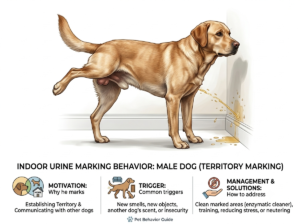
Male dogs often mark territory, but excessive marking inside the house can become a problem.
Signs include:
- Peeing on walls
- Marking furniture
- Marking new objects
This behavior is strongly linked to testosterone.
3. Roaming or Escaping
A dog that keeps trying to escape the house or yard may be searching for a female in heat.
Some intact male dogs can smell a female in heat from several miles away, which can trigger escape behavior.
This is one of the strongest signs.
Example:
Some dogs can smell a female dog in heat from miles away.
This can put them at risk of:
- Car accidents
- Dog fights
- Getting lost
4. Aggression Toward Other Male Dogs
Testosterone can increase dominance and territorial behavior.
Signs include:
- Growling
- Fighting
- Guarding space
- Becoming reactive around male dogs
Neutering may reduce hormone-based aggression.
But note:
Not all aggression is hormonal.
In some cases, stress and aggressive behavior may also cause excessive panting. Learn more about why is my dog panting so much.
5. Obsessive Focus on Female Dogs
If your dog becomes restless, stops eating, cries, or becomes impossible to control around female dogs, hormones may be taking over.
This can cause mental stress and frustration.
6. Enlarged Testicles or Testicular Problems
Sometimes physical signs may suggest a problem.
Look for:
- Swelling
- Pain
- Uneven size
- Lumps
Neutering may be medically recommended in these cases.
7. Frequent Frustration and Restlessness
A sexually mature male dog may show:
- Pacing
- Whining
- Constant alertness
- Trouble relaxing
This can affect sleep and overall mood.
Some dogs may also show fast breathing or nighttime breathing changes when they feel stressed. You can read more about dog breathing heavy while sleeping.
8. Strong Dominance Behavior
Some dogs become overly dominant.
Signs:
- Guarding toys
- Pushing other dogs
- Refusing commands
- Challenging behavior
Hormones can increase this.
9. Strong Odor Around Other Dogs
Unneutered males often produce stronger body odors due to hormones.
Other dogs may react differently to them.
10. High Risk of Testicular Cancer
A major medical benefit of neutering is eliminating the risk of testicular cancer.
This is one of the strongest health reasons.
11. Enlarged Prostate Problems
Older unneutered dogs can develop prostate enlargement.
Signs:
- Difficulty urinating
- Pain
- Constipation
Neutering often helps prevent this.
Health Benefits of Neutering
The Merck Veterinary Manual explains that neutering may help reduce the risk of testicular cancer and some prostate-related conditions.
It may also help:
- Prevent testicular cancer
- Lower prostate disease risk
- Reduce some hormone-related tumors
- Reduce unwanted breeding
- Improve long-term management
When Is the Right Age to Neuter?
This depends on breed and size.
General guide:
Small breeds:
Around 6–9 months
Medium breeds:
Around 9–12 months
Large breeds:
Around 12–18 months
Large breeds sometimes need more time for bone growth.
Always ask your vet.
What Happens If You Wait Too Long?
Delaying neutering may lead to:
- Stronger bad habits
- More marking
- Increased aggression
- More roaming
- Higher risk of fights
- Higher disease risks
Some behaviors become harder to reverse over time.
Can Neutering Change Personality?
This is a common fear.
The answer: Usually no.
Your dog’s core personality stays the same.
It mainly reduces hormone-driven behaviors.
Example:
A playful dog will usually remain playful.
A loving dog will remain loving.
Recovery After Neutering
Most dogs recover quickly.
Typical healing time:
7–14 days
Full healing may take about 2 weeks.
During recovery:
- Keep activity low
- Prevent licking
- Keep the wound clean
- Follow medication instructions
Warning Signs After Surgery
Call your vet if you notice:
- Heavy bleeding
- Swelling
- Bad smell
- Pus
- Fever
- Loss of appetite for more than 24 hours
- Severe pain
When Neutering May Not Be the Answer
Not every problem needs neutering.
Sometimes issues come from:
- Anxiety
- Poor training
- Fear
- Lack of exercise
- Boredom
A full behavior check is important.
Some health problems like hormone disorders or diabetes can also affect a dog’s behavior and energy levels. Understanding the signs and symptoms of diabetes in dogs may help rule out other medical causes.
Should Every Dog Be Neutered?
Not always.
It depends on:
- Health
- Breed
- Lifestyle
- Behavior
- Breeding plans
This decision should be personal and based on veterinary advice.
Frequently Asked Questions
Q1) What age should a dog be neutered?
Most dogs are neutered between 6 and 18 months depending on size and breed.
Q2) Will neutering stop my dog from marking?
It often reduces marking, especially if done early.
Q3) Can neutering reduce aggression?
It may help with hormone-related aggression, but not all aggression.
Q4) How long does it take a dog to recover from neutering?
Most dogs recover in 7–14 days.
Q5) Is neutering painful for dogs?
The surgery itself is done under anesthesia, and pain medicine helps during recovery.
Q6) Can my dog still mount after neutering?
Yes, sometimes. Habit-based mounting can continue even after hormones drop.
Final Thoughts
Neutering can be an important step for many dogs, especially when hormones begin affecting behavior or health. Signs like constant marking, roaming, aggression, and obsessive mounting may suggest it is time to consider it. But every dog is different. The best choice depends on your dog’s age, breed, and health. If you are unsure, speak with your veterinarian and make the decision based on what is best for your dog’s long-term wellbeing.
Written by Muhammad Abdullah | Zoologist & Founder of YourPetSaver

Zoologist, animal researcher, and founder of YourPetSaver.
1 thought on “Signs Your Dog Needs to Be Neutered: Behavior, Health Clues,”