
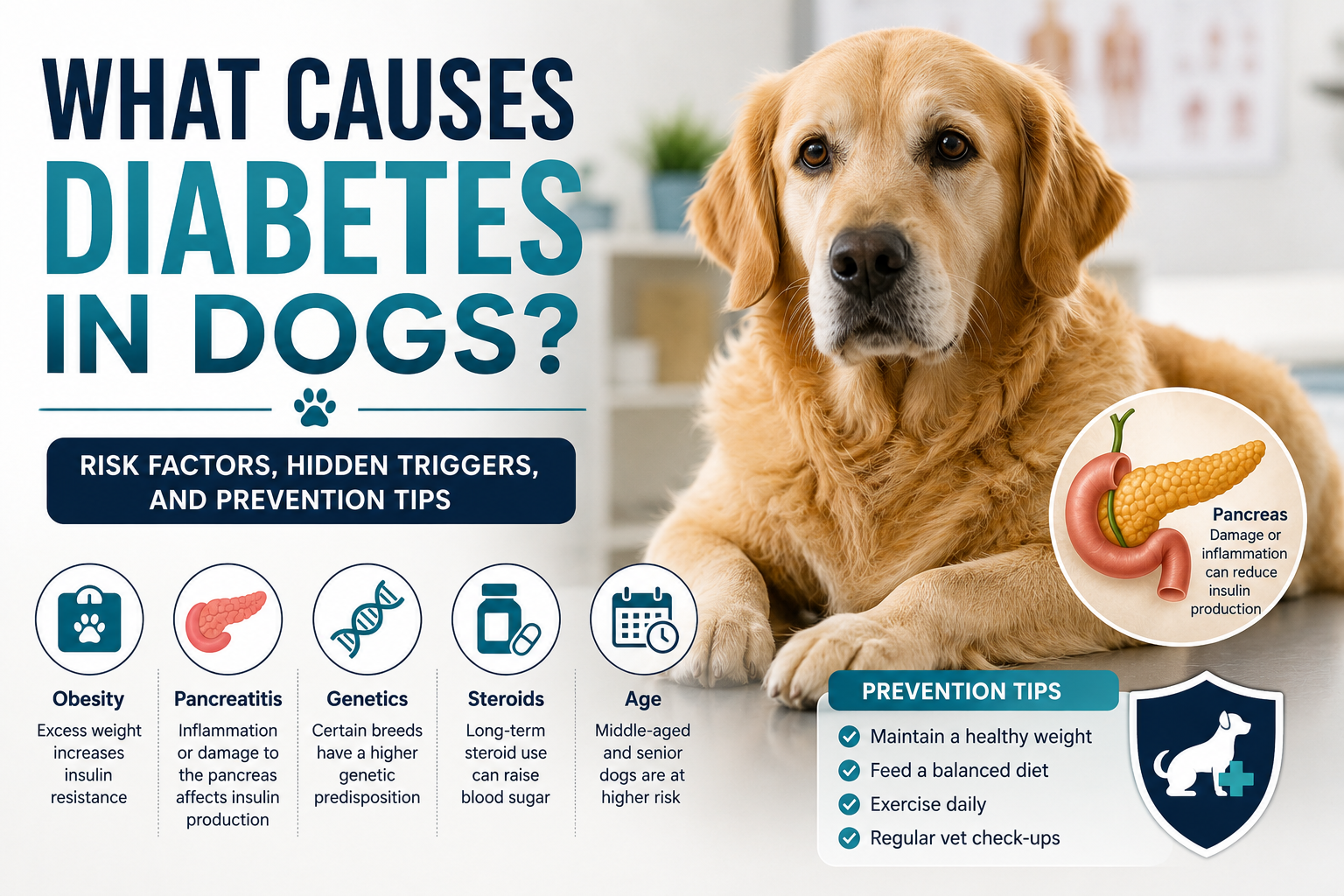
Diabetes in dogs is usually caused by the body not making enough insulin or not using insulin properly. The most common triggers include obesity, pancreatitis, genetics, hormonal disorders, long-term steroid use, and age-related changes. Some dogs are naturally at higher risk, while others develop diabetes because of lifestyle or medical conditions.
In simple words, diabetes happens when sugar stays in the blood instead of moving into cells for energy.
How Diabetes Starts in Dogs
A dog’s body turns food into glucose.
That glucose needs insulin to enter the body’s cells.
Insulin is made by the pancreas.
If the pancreas becomes damaged or the body stops responding to insulin, sugar builds up in the bloodstream.
That is how diabetes begins.
Example:
Think of insulin like a key.
Without the key, sugar cannot unlock the cells.
It stays trapped in the blood.
Over time, this becomes dangerous.
The Most Common Causes of Diabetes in Dogs
Obesity
Excess weight is one of the biggest risk factors.
Fat cells can make it harder for insulin to work properly.
This forces the pancreas to work harder.
Over time, that pressure can lead to diabetes.
Example:
An overweight indoor dog that gets little exercise may have a much higher risk than an active lean dog.
This is why weight control matters.
Pancreatitis
Pancreatitis means inflammation of the pancreas.
This is one of the strongest medical causes of diabetes.
Since the pancreas makes insulin, damage to it can reduce insulin production.
Some dogs develop diabetes after repeated pancreatitis attacks.
Signs of pancreatitis may include:
- vomiting
- stomach pain
- refusing food
- weakness
According to VCA Animal Hospitals, pancreatitis is a serious condition that can affect insulin function.
Genetics and Breed Risk
Some breeds have a naturally higher chance of developing diabetes.
Examples include:
- Miniature Schnauzer
- Poodle
- Beagle
- Dachshund
This does not mean they will always get diabetes.
It means owners should watch for early warning signs.
If you want to know those warning signs, read our guide on Signs and Symptoms of Diabetes in Dogs.
Hormonal Disorders
Certain hormone problems can increase blood sugar.
Examples:
- Cushing’s syndrome
- thyroid imbalance
- heat cycle hormones in females
These conditions can block insulin from working correctly.
That raises diabetes risk.
Long-Term Steroid Use
Steroid medicines are useful but can affect blood sugar.
Examples include:
- prednisone
- dexamethasone
Long-term use may lead to insulin resistance.
Never stop medication suddenly.
Always talk to your vet first.
Age and Senior Changes
Most diabetic dogs are middle-aged or older.
As dogs age:
- metabolism slows
- organs weaken
- weight gain becomes easier
This increases risk.
Older dogs should be monitored more closely.
Can Food Cause Diabetes in Dogs?
Food alone does not directly cause diabetes, but poor diet and overeating can lead to obesity, which increases the risk.
High-risk habits include:
- too many treats
- table scraps
- fatty foods
- sugary snacks
- poor-quality fillers
Avoid feeding:
- candy
- sweet baked foods
- processed human desserts
Healthy diet matters.
Can Female Dogs Get Diabetes More Often?
Yes.
Unspayed female dogs can have a slightly higher risk.
Hormonal changes during heat can affect insulin.
That is why some vets recommend spaying in high-risk cases.
Early Risk Signs Before Diabetes Develops
Before full diabetes appears, some dogs may show:
- gaining weight easily
- drinking slightly more
- getting tired faster
- slow wound healing
- increased hunger
These can be early clues.
The Merck Veterinary Manual notes that catching these patterns early can improve long-term outcomes.
Can Diabetes in Dogs Be Prevented?
Sometimes, yes.
Prevention steps:
Keep your dog at a healthy weight
This lowers insulin pressure.
Feed balanced meals
Avoid overfeeding.
Exercise daily
Even short walks help.
Monitor older dogs
Especially after age 7.
Treat pancreas problems early
Pancreatitis should never be ignored.
How Fast Can Diabetes Develop?
Diabetes can develop slowly over months or appear faster after pancreas damage or major hormonal imbalance.
Some owners notice symptoms suddenly.
Others miss them for weeks.
That is common.
FAQs
Q1) What is the biggest cause of diabetes in dogs?
Obesity and pancreas damage are among the most common causes.
Q2) Can too much sugar cause diabetes in dogs?
Not directly, but unhealthy diets can increase obesity risk.
Q3) Which dogs are most at risk for diabetes?
Older, overweight dogs and certain breeds have higher risk.
Q4) Can pancreatitis lead to diabetes?
Yes. Repeated pancreas inflammation can damage insulin-producing cells.
Q5) Can diabetes be prevented in dogs?
In many cases, healthy weight, proper diet, and regular exercise can reduce risk.
Final Thoughts
Diabetes usually does not happen overnight.
It often builds slowly through weight gain, pancreas damage, hormones, or aging.
The good news is that many risk factors can be managed.
The earlier you understand the cause, the better chance your dog has of staying healthy.
And if you notice thirst, urination changes, or weight loss, do not wait too long to act.
Written by Muhammad Abdullah | Zoologist & Founder of YourPetSaver

Zoologist, animal researcher, and founder of YourPetSaver.