
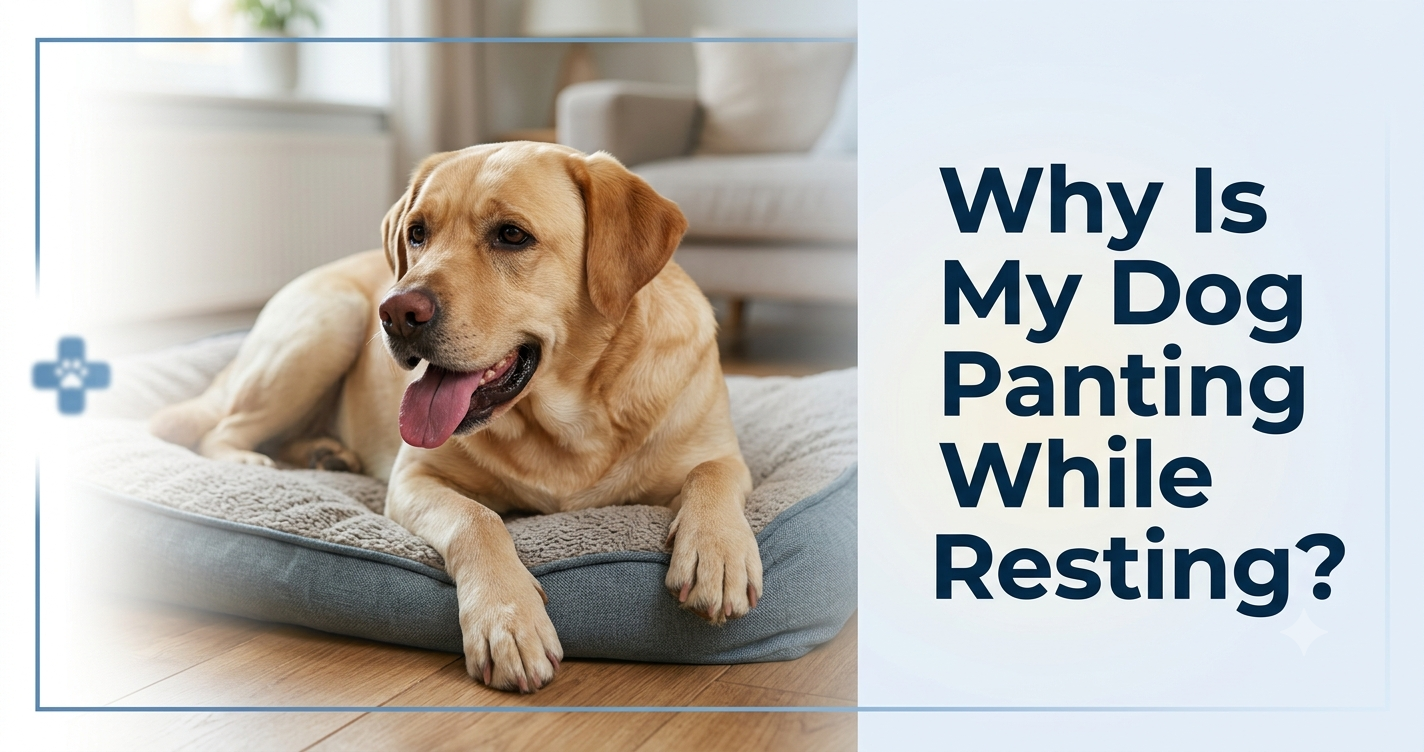
If your dog is panting while resting, it may be due to heat, stress, pain, anxiety, obesity, medication side effects, or medical conditions like heart disease, lung problems, diabetes, or Cushing’s disease. Light panting can sometimes be normal, but heavy or sudden panting during rest should never be ignored.
Dogs naturally pant to cool down, but when they are resting and still breathing heavily, it often means something is making them uncomfortable or affecting their health.
Is It Normal for Dogs to Pant While Resting?
Yes, mild panting while resting can be normal if your dog is warm, recently active, or excited. But if it continues for a long time or happens often without a clear reason, it may be abnormal.
Dogs use panting to control their body temperature because they cannot sweat like humans. After playing, walking, or lying in a warm room, a little panting is expected.
The problem starts when your dog is calm, relaxed, and still breathing heavily for no reason.
That is when you should pay attention.
Common Reasons Why Dogs Pant While Resting
Heat or Overheating
Dogs may pant while resting if they are too hot. Overheating is one of the most common causes of heavy panting.
Even indoors, dogs can overheat, especially thick-coated breeds like Huskies or Golden Retrievers.
For example, if your dog is lying near sunlight or in a warm room, they may start panting heavily.
Signs of overheating include:
- Excessive drooling
- Warm ears
- Red gums
- Fast breathing
If your dog feels hot, move them to a cooler place immediately.
Related: Read our guide on why is my dog panting so much.
What Does Stress Panting Look Like in Dogs?
Stress panting usually looks fast, shallow, and sudden. It often comes with pacing, trembling, lip licking, wide eyes, or restlessness.
Dogs may stress-pant during thunderstorms, fireworks, traveling, or being left alone.
Unlike heat panting, stress panting often stops once the trigger is gone.
Pain or Discomfort
Pain is one of the hidden reasons dogs pant while resting. Dogs often hide pain, so panting can be one of the earliest signs.
Pain can come from:
- Arthritis
- Injuries
- Joint pain
- Stomach pain
- Internal discomfort
For example, an older dog with hip pain may lie down but still pant because resting does not fully remove the pain.
Look for limping, stiffness, or whining.
Obesity in dogs
Overweight dogs often pant more because extra weight makes breathing harder.
Even a short walk can make an overweight dog breathe heavily for longer than usual.
Obesity also increases the risk of heart problems and heat intolerance.
Medication Side Effects
Some medications can cause panting as a side effect, especially steroids and certain pain medicines.
If panting started after a new medication, talk to your vet before stopping it.
Health Problems That Can Cause Panting While Resting
Heart Diseases in dogs
Dogs with heart disease may pant more because their body is not getting enough oxygen.
Common signs include:
- Coughing
- Weakness
- Low energy
- Fast breathing during sleep
Heart problems are more common in senior dogs.
According to VCA Animal Hospitals, heart disease in dogs can cause heavy panting, coughing, and low energy.
Lung Problems in dogs
Lung conditions can make breathing harder, causing heavy panting even during rest.
Examples include:
- Pneumonia
- Collapsed trachea
- Respiratory infections
Watch for wheezing or noisy breathing.
Diabetes in dogs
Diabetes can cause panting because it affects energy levels, hydration, and blood sugar balance.
Signs may include:
- Increased thirst
- Frequent urination
- Weight loss
- Weakness
- Cloudy eyes
Cushing’s Disease
Cushing’s disease is a hormone disorder that often causes excessive panting, increased thirst, hair loss, and a pot-bellied appearance.
It is common in middle-aged and senior dogs.
Why Is My Dog Panting While Resting and Not Eating?
If your dog is panting and refusing food, it may be a sign of pain, infection, fever, digestive problems, or serious illness.
This combination should not be ignored.
For example, a dog with stomach pain may avoid food but continue panting because of discomfort.
If your dog skips food for more than 24 hours, call your vet.
Why Is My Dog Panting While Resting and Shaking?
Panting and shaking together can be caused by fear, pain, poisoning, fever, low blood sugar, or severe anxiety.
For example, diabetic dogs with low blood sugar may shake and pant at the same time.
If your dog looks weak or confused, seek help quickly.
Why Is My Senior Dog Panting While Resting?
Senior dogs may pant more while resting because of arthritis, heart disease, lung issues, pain, or age-related weakness.
Frequent panting in older dogs should always be taken seriously because hidden health problems are more common with age.
Why Is My Male Dog Panting for No Reason?
Male dogs may pant due to stress, pain, heat, or hormonal frustration especially if they are not neutered.
Unneutered male dogs can become restless when they smell a nearby female in heat.
Related: Read Signs Your Dog Needs to Be Neutered.
Why Is My Female Dog Panting for No Reason?
Female dogs may pant because of heat, stress, pregnancy, pain, or hormonal changes during their heat cycle.
Pregnant or nursing dogs may also pant naturally.
When Should I Worry About My Dog Panting?
You should worry if panting is sudden, severe, happens often, or comes with weakness, vomiting, shaking, or pale gums.
Warning signs include:
- Trouble breathing
- Blue or pale gums
- Collapse
- Weakness
- Loss of appetite
- Vomiting
- Severe shaking
These may need urgent vet care.
How to Calm a Panting Dog
Move your dog to a cool place, offer fresh water, remove stress triggers, and monitor their breathing.
Steps to help:
- Keep them cool
- Give clean water
- Reduce noise or stress
- Check their temperature
- Watch their breathing rate
If the panting does not improve, contact your vet.
How Do Vets Find the Cause?
Vets may use:
- Physical exams
- Blood tests
- X-rays
- Ultrasound
- Heart tests
- Oxygen checks
These tests help identify whether the problem is simple or serious.
Can Delaying Treatment Be Dangerous?
Yes, delaying treatment can make the condition worse and may lead to heatstroke, dehydration, organ damage, or even collapse.
For example, untreated heatstroke can damage kidneys within hours.
Early action can save your dog’s life.
The Merck Veterinary Manual explains that untreated heatstroke and breathing distress can become life-threatening quickly.
FAQs
Q1) What does stress panting look like in dogs?
Stress panting is usually fast, shallow, and paired with pacing, shaking, or wide eyes.
Q2) Why is my dog panting while resting and not eating?
This can signal pain, infection, stomach problems, or serious illness.
Q3) Why is my dog panting while resting and shaking?
It may be caused by fear, pain, poisoning, or low blood sugar.
Q4) Why is my senior dog panting while resting?
Older dogs may pant because of pain, arthritis, heart problems, or lung disease.
Q5) When should I worry about dog panting?
If panting is sudden, heavy, or comes with weakness, shaking, vomiting, or pale gums.
Final Thoughts
Panting while resting is not always dangerous, but it should never be ignored if it becomes frequent or severe.
Sometimes it is caused by simple things like heat or stress. Other times, it can be the first sign of a serious health issue.
Watching your dog carefully and acting early can make a big difference.
Written by Muhammad Abdullah | Zoologist & Founder of YourPetSaver

Zoologist, animal researcher, and founder of YourPetSaver.
3 thoughts on “Why Is My Dog Panting While Resting? Causes, Warning Signs,”