
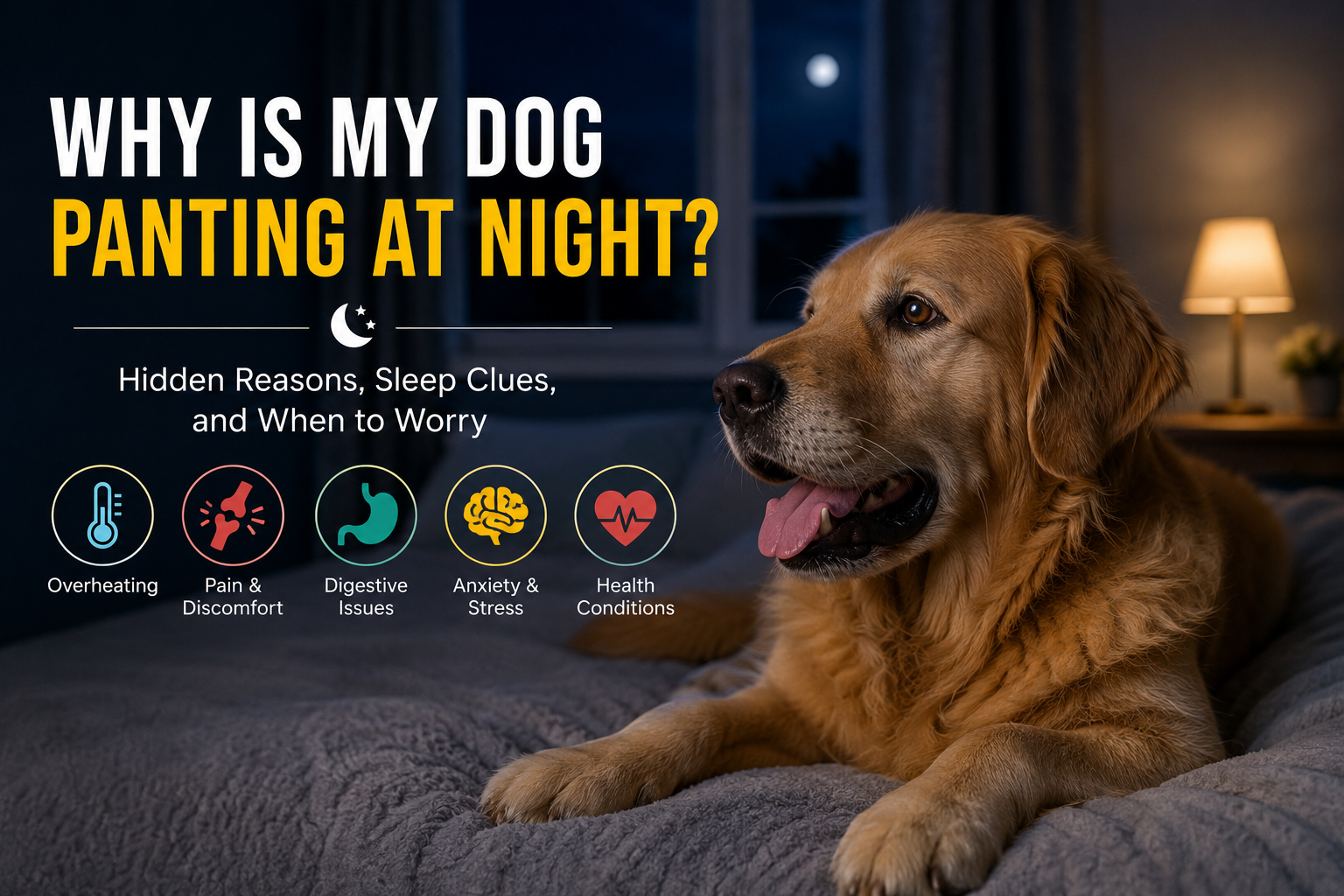
If your dog is panting at night, it can happen because of overheating, stress, pain, digestion issues, age-related discomfort, or health problems like heart disease. Mild panting may be harmless, but if it happens often, disturbs sleep, or comes with restlessness, coughing, or weakness, it needs attention.
Night time panting feels more noticeable because everything is quiet. But in many cases, the cause is different from daytime panting.
Why Does My Dog Pant More at Night?
At night, a dog’s body slows down.
This makes discomfort easier to notice.
During the day, dogs stay distracted with movement, sounds, and activity. But once they settle down, hidden problems like joint pain, breathing trouble, or stomach discomfort can feel stronger.
Example:
A dog with mild arthritis may seem fine all day but start panting after lying still for an hour at bedtime.
That is why nighttime panting often points to discomfort that builds up during rest.
Common Reasons Your Dog Pants at Night
The Room Is Too Warm
Dogs release heat through panting.
If the bedroom feels warm, has poor airflow, or thick bedding traps heat, your dog may start panting.
This is common in:
- Thick-coated breeds
- Overweight dogs
- Flat-faced breeds
Example:
A French Bulldog sleeping under heavy blankets may overheat faster than a lean short-haired dog.
Check if your dog moves to cold floors or changes sleeping spots often.
That is a strong clue.
Pain Gets Worse After Rest
Pain often becomes stronger when the body stays still.
This is especially common in senior dogs.
Conditions like:
- Arthritis
- Hip dysplasia
- Back pain
- Muscle stiffness
can trigger night time panting.
Example:
An older Labrador Retriever may struggle to lie comfortably and keep shifting positions while panting.
This is different from regular tired breathing.
Digestive Discomfort After Dinner
This is a commonly missed cause.
Eating too much, eating too fast, or eating late can cause:
- Gas buildup
- Acid reflux
- Bloating
- Stomach pressure
This can make lying down uncomfortable.
Example:
A dog that eats a large meal and immediately sleeps may pant because of trapped gas.
Watch if panting starts 1–2 hours after dinner.
That pattern matters.
Anxiety at Night
Some dogs feel more anxious in darkness or silence.
Night triggers can include:
- Being alone
- Strange noises
- Thunder
- Separation anxiety
Unlike daytime stress, nighttime anxiety often comes with pacing.
If your dog also has excessive daytime panting, read why is my dog panting so much.
Sleep Disturbances or Bad Dreams
Dogs dream like humans.
During REM sleep, some dogs:
- twitch
- whine
- kick
- breathe faster
This can cause short bursts of panting.
Usually this stops quickly.
But if your dog wakes up confused, restless, or keeps panting for long periods, it may be more than dreaming.
Why Is My Senior Dog Panting at Night?
Senior dogs often pant at night because pain, heart strain, and age-related weakness become more noticeable during rest.
Older dogs may also have:
- Cognitive decline
- Reduced lung efficiency
- Muscle pain
- Joint inflammation
Night time is when these issues show up most clearly.
Is It Normal for Dogs to Pant in Their Sleep?
Light panting during sleep can be normal if it is brief and linked to dreaming or temperature.
It becomes abnormal if:
- it wakes them repeatedly
- it lasts long
- it comes with coughing
- it looks labored
Could Night Panting Mean Heart Problems?
Yes.
Heart problems often feel worse at night.
When a dog lies flat, fluid pressure can make breathing harder.
Watch for:
- coughing at night
- weakness
- faster breathing
- less energy on walks
According to funerl night time breathing changes can sometimes signal heart disease.
When Should You Worry?
Take night time panting seriously if:
- it happens every night
- your dog cannot settle
- there is shaking
- appetite drops
- vomiting starts
- gums look pale
- breathing looks heavy
These signs may point to deeper problems.
The Merck Veterinary Manual notes that abnormal breathing patterns should never be ignored if they persist.
How to Help a Dog Panting at Night
Cool the sleeping area
Use airflow and lighter bedding.
Check dinner timing
Avoid heavy meals right before sleep.
Watch sleeping position
If your dog keeps changing positions, pain may be involved.
Keep a simple log
Write:
- what time panting starts
- what they ate
- room temperature
- how long it lasted
Patterns help identify the cause faster.
FAQs
Q1) Why does my dog only pant at night?
Night time panting often happens because discomfort becomes more noticeable during rest, especially pain, heat, or digestive issues.
Q2) Why is my dog panting and restless at night?
Restlessness plus panting can signal anxiety, pain, or stomach discomfort.
Q3) Is panting at night a sign of diabetes?
Sometimes. Dogs with blood sugar imbalance may feel weak or dehydrated. Watch for excessive thirst and urination too.
Q4) Should I wake my dog if they are panting in sleep?
Only if the panting looks intense, prolonged, or they seem distressed.
Final Thoughts
Night time panting is different because it often reveals problems hidden during the day.
Sometimes the cause is simple, like heat.
Other times, it can be pain, digestion, or early heart trouble.
If your dog keeps panting night after night, pay attention to patterns.
The timing itself can be an important clue.
Written by Muhammad Abdullah | Zoologist & Founder of YourPetSaver

Zoologist, animal researcher, and founder of YourPetSaver.
1 thought on “Why Is My Dog Panting at Night? Hidden Reasons, Sleep Clues”