
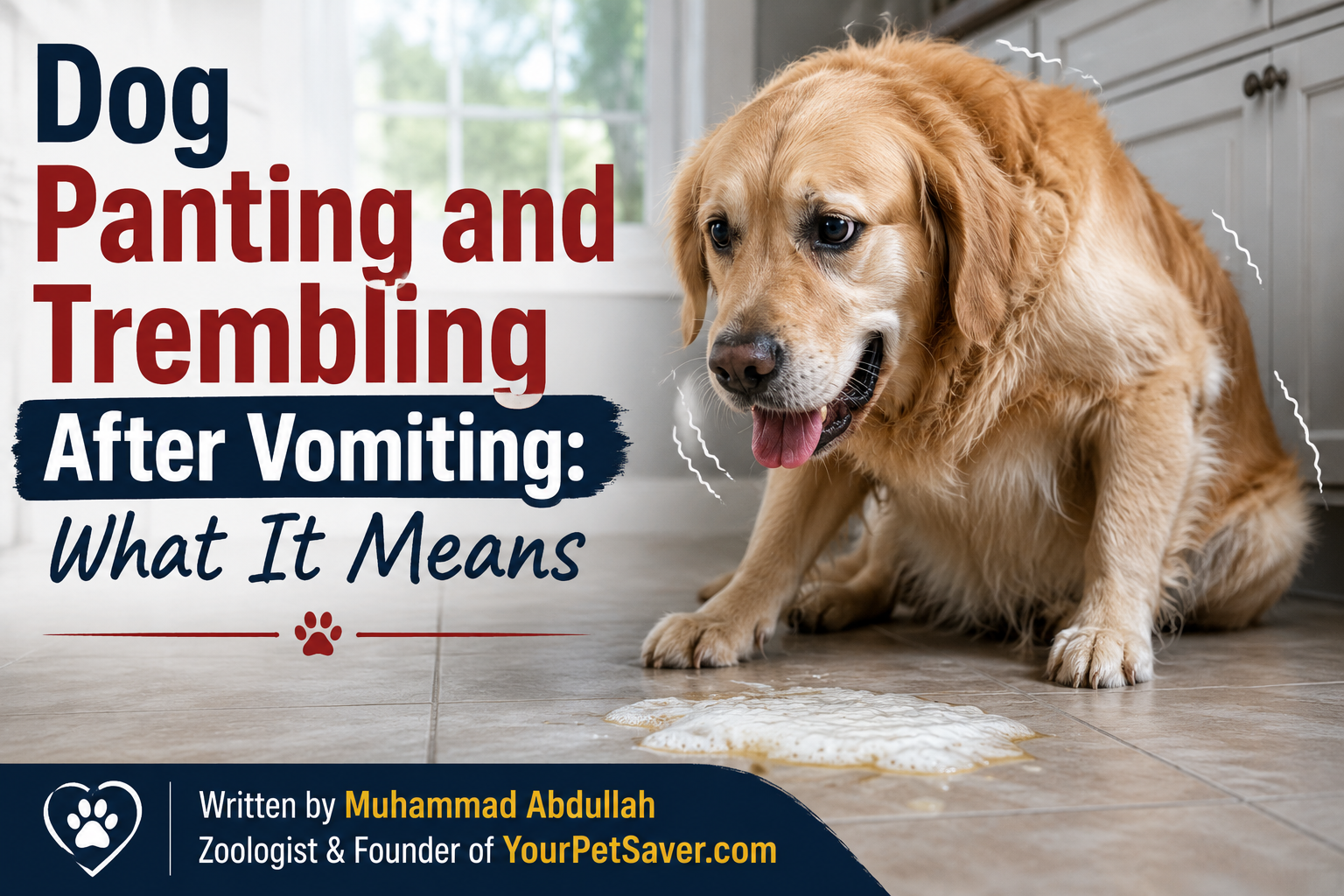
If your dog is panting and trembling after vomiting, it can happen because of pain, nausea, dehydration, stress, poisoning, stomach bloating, pancreatitis, or weakness after throwing up. Sometimes it is mild and temporary, but if the panting and shaking continue, it can signal a more serious health problem that needs quick attention.
Is It Normal for a Dog to Panting and Tremble After Vomiting?
Sometimes yes, but not always.
Vomiting is stressful on the body.
After throwing up, some dogs may pant for a short time because of:
- stomach discomfort
- weakness
- stress
But if trembling continues or gets worse, it should not be ignored.
Why Does a Dog Panting After Vomiting?
Panting after vomiting usually means the body is trying to recover.
It can happen because:
- the stomach hurts
- the dog feels nauseous
- dehydration starts
- body temperature changes
This is especially common if vomiting was forceful.
If your dog has been vomiting white foam, read why is my dog throwing up white foam.
Pain or Stomach Cramping
Stomach pain is one of the biggest reasons dogs shake after vomiting.
Vomiting can irritate the stomach lining.
Pain may cause:
- trembling
- pacing
- heavy breathing
- curled posture
Example:
A dog with gastritis may vomit, then lie down while panting and shaking from abdominal pain.
Dehydration
When dogs vomit repeatedly, they lose fluids fast.
Dehydration can cause:
- weakness
- dry gums
- shaking
- fast breathing
Small dogs and puppies can dehydrate quickly.
According to PetMD, dehydration after vomiting can become dangerous if not treated.
Poisoning or Toxic Food
If your dog vomited after eating something toxic, trembling and panting may be early warning signs.
Common toxins:
- chocolate
- onions
- xylitol
- grapes
- chemicals
This is an emergency.
Other signs:
- drooling
- weakness
- collapse
Pancreatitis
Pancreatitis often causes:
- vomiting
- shaking
- severe stomach pain
- heavy panting
- refusing food
Fatty foods are one of the biggest triggers.
This condition can become serious quickly.
Bloat or Stomach Twist
Bloat can cause vomiting attempts, panting, and shaking.
This is one of the most dangerous causes.
Signs:
- swollen belly
- restlessness
- failed vomiting
- pain
The American Kennel Club warns that bloat can become life-threatening within hours.
Anxiety After Vomiting
Some dogs panic after vomiting.
This can trigger:
- shaking
- panting
- pacing
- clingy behavior
This is more common in nervous dogs.
If it happens often, compare it with why is my dog panting and shaking.
Fever or Infection
Vomiting plus panting and trembling may point to infection.
Possible causes:
- stomach infection
- viral illness
- food poisoning
Signs often include:
- low energy
- warm body
- refusal to eat
Low Blood Sugar
This is common in:
- puppies
- diabetic dogs
- small breeds
Low blood sugar after vomiting can cause:
- trembling
- weakness
- confusion
- panting
If your dog has diabetes risk, see signs and symptoms of diabetes in dogs.
What Should You Do Right Away?
Start by keeping your dog calm and hydrated.
Do this:
- remove food for a short time
- offer small water amounts
- monitor breathing
- check gums
- watch energy levels
Do not force food immediately.
When Should You Go to the Vet?
Call a vet immediately if:
- vomiting repeats
- shaking gets worse
- your dog collapses
- gums turn pale
- belly swells
- breathing looks difficult
- diarrhea starts
These signs can point to serious illness.
FAQs
Q1) Why is my dog panting after throwing up?
Usually because of pain, nausea, or dehydration.
Q2) Is shaking normal after vomiting?
Mild temporary shaking can happen, but ongoing trembling is concerning.
Q3) Can poisoning cause vomiting and shaking?
Yes. This is one of the most serious causes.
Q4) Should I give my dog food after vomiting?
Wait a little first, then offer bland food if vomiting stops.
Q5) When is vomiting with panting an emergency?
If it repeats, includes weakness, swelling, or breathing trouble.
Final Thoughts
Panting and trembling after vomiting can sometimes be mild, but it can also signal serious health issues. The key is watching what happens next. If symptoms stop and your dog recovers, it may be minor.
If they continue or worsen, getting help early is the safest choice.
Written by Muhammad Abdullah | Zoologist & Founder of YourPetSaver

Zoologist, animal researcher, and founder of YourPetSaver.
1 thought on “Dog Panting and Trembling After Vomiting: What It Means”