
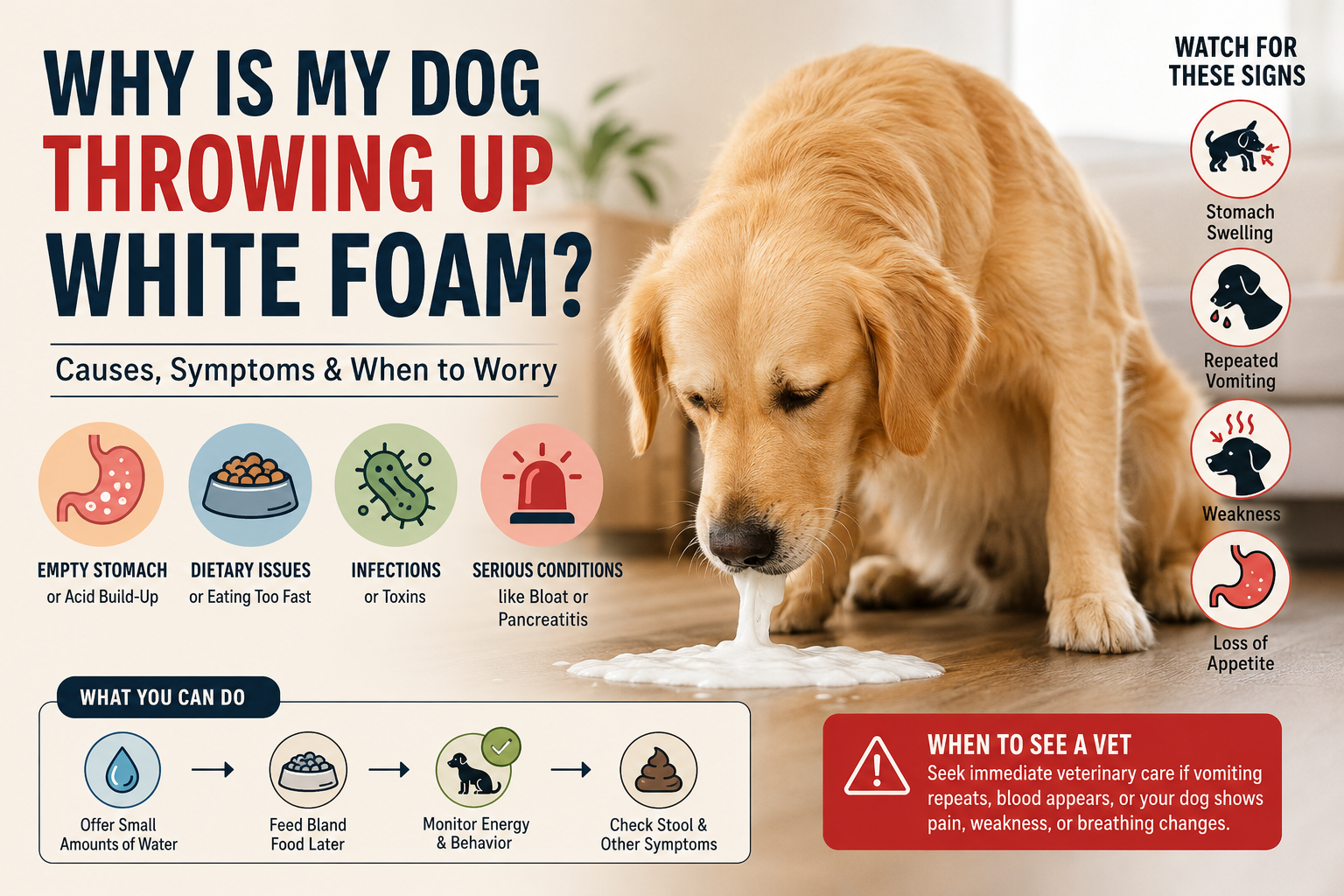
If your dog is throwing up white foam, it usually means the stomach is empty, irritated, or struggling with acid build up. In some cases, white foam vomit in dogs can happen because of indigestion, eating too fast, dietary changes, infections, toxins, or serious medical problems like bloat or pancreatitis. If it happens once and stops, it may not be serious. If it keeps happening, it should be checked.
Why Is My Dog Throwing Up White Foam?
Dogs throw up white foam when there is little or no food left in the stomach.
Instead of food, the stomach pushes out:
- saliva
- stomach acid
- mucus
This creates the foamy white vomit.
It usually happens when the stomach is irritated.
Is White Foam Vomit in Dogs Serious?
Sometimes yes.
One-time vomiting may happen because of:
- hunger
- mild stomach upset
- eating grass
But repeated vomiting can mean:
- infection
- blockage
- poison
- bloat
- digestive disease
This depends on what other symptoms are present.
Common Causes of White Foam Vomit in Dogs
Empty Stomach and Acid Build-Up
A dog may throw up white foam early in the morning if the stomach stays empty too long.
This happens because acid builds up overnight.
Example:
A dog that eats dinner at 7 PM and does not eat again until late morning may vomit foam after waking up.
Eating the Wrong Food
Some foods irritate the stomach.
Common triggers:
- greasy food
- spicy food
- spoiled food
- dairy
- too many treats
Sudden food changes can also trigger vomiting.
If your dog recently ate sweet potatoes or other new foods, review our guide on can dogs eat sweet potatoes.
Eating Too Fast
Dogs that eat too quickly may swallow air.
This can cause:
- gagging
- burping
- white foam vomiting
Fast eating often causes stomach stress.
Kennel Cough
Dog coughing up white foam can sometimes be confused with vomiting.
Kennel cough causes repeated coughing and may produce white frothy mucus.
Signs:
- dry cough
- honking sound
- foam after coughing
According to American Kennel Club, kennel cough is common in dogs exposed to other dogs.
Acid Reflux
Stomach acid moving upward can cause irritation.
This often happens:
- late at night
- early morning
- after long gaps between meals
Dogs may lick lips and swallow repeatedly before vomiting.
Bloat (Emergency)
Bloat can cause white foam vomiting and can be life-threatening.
Signs:
- swollen stomach
- pacing
- pain
- failed vomiting attempts
- heavy panting
If your dog also shows breathing distress, read why is my dog panting so much.
Pancreatitis
Fatty foods can trigger pancreas inflammation.
Symptoms:
- vomiting
- pain
- weakness
- Diarrhea
- refusal to eat
This needs veterinary care.
Poisoning
Chemicals, plants, or toxic foods can irritate the stomach.
Common examples:
- chocolate
- xylitol
- onions
- cleaning chemicals
This can quickly turn serious.
When Does It Usually Happen?
Timing can help identify the cause.
Early Morning
Usually acid build-up.
After Eating
Often food intolerance or eating too fast.
At Night
Could point to reflux or stomach irritation.
After Exercise
May happen if the dog drank too much water or exercised too soon after eating.
What Environment Can Trigger It?
Environment matters.
Triggers include:
- heat
- stress
- dirty water
- spoiled food outside
- sudden weather changes
- anxiety
Stress-related vomiting can also happen with shaking.
See why is my dog panting and shaking.
My Dog Is Puking White Foam but Acting Normal
If it happened once and your dog is acting normal, monitor for 24 hours.
Offer:
- water
- bland food
- rest
Watch for repeat vomiting.
Why My Dog Threw Up White Foam and Won’t Eat
This is more concerning.
It may signal:
- pain
- infection
- blockage
- pancreatitis
If it lasts more than a few hours, contact a vet.
The PetMD advises quick evaluation when vomiting is paired with appetite loss.
What Should You Do?
Start by removing food for a short period.
Then:
- offer small water amounts
- feed bland food later
- monitor energy
- check stool
- watch breathing
Do not force food immediately.
When Should You Worry?
See a vet immediately if:
- vomiting repeats
- blood appears
- your dog seems weak
- breathing changes
- stomach swells
- Diarrhea starts
- shaking happens
These can signal serious illness.
FAQs
Q1) Why is my dog throwing up white foam?
Usually because of an empty stomach, acid build up, or irritation.
Q2) Dog coughing up white foam — is it vomiting?
Not always. It can be kennel cough or airway irritation.
Q3) My dog is barfing white foam but seems okay. Should I worry?
One-time vomiting may not be serious, but repeated episodes should be checked.
Q4) What food causes white foam vomiting in dogs?
Greasy, spicy, spoiled, or sudden new foods can trigger it.
Q5) When dogs vomit white foam, is it an emergency?
It depends. If it is repeated or paired with pain, yes.
Final Thoughts
White foam vomit in dogs can be harmless or serious. Sometimes it is just an empty stomach. Other times it can point to bloat, infection, or digestive disease. The key is to look at timing, Behavior, and other symptoms.
If something feels unusual, acting early is always the safer choice.
Written by Muhammad Abdullah | Zoologist & Founder of YourPetSaver

Zoologist, animal researcher, and founder of YourPetSaver.
1 thought on “Why Is My Dog Throwing Up White Foam? Causes, Symptoms”