
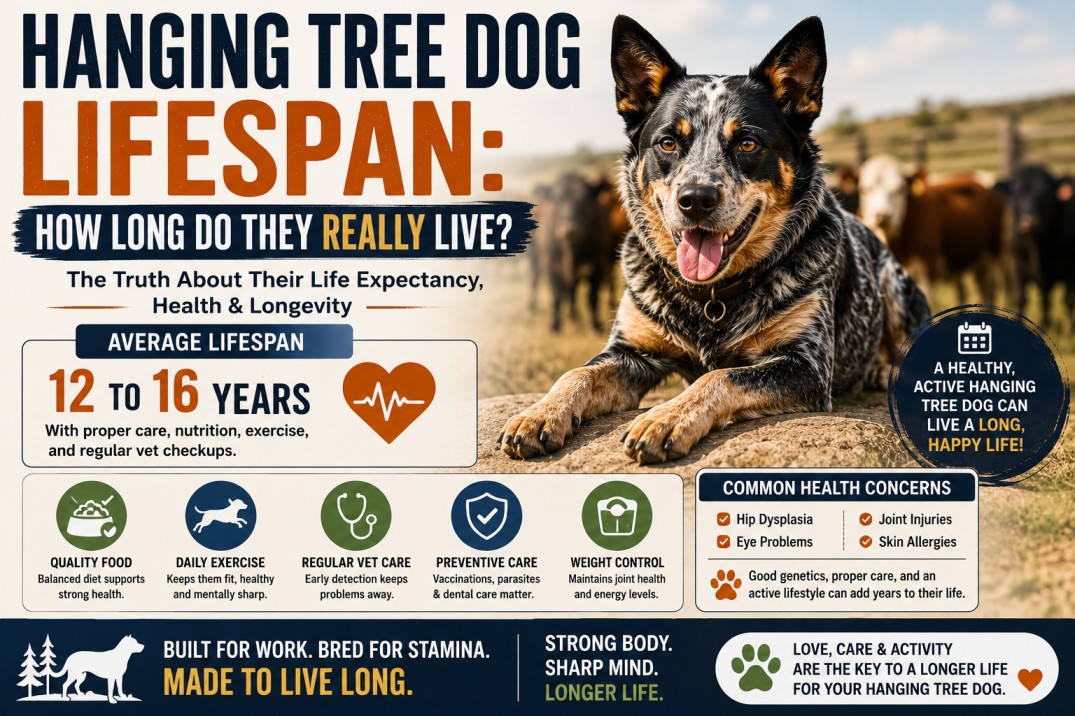
Hanging Tree Dog lifespan usually live between 12 to 16 years when they are healthy, active, and properly cared for. Their lifespan depends on genetics, diet, exercise, and medical care. Because the Hanging Tree Dog breed was developed as a tough working dog, many stay strong and active well into their senior years.
How Long Do Hanging Tree Dogs Live?
Most Hanging Tree Dogs live around 12–16 years. Some may live longer with excellent care. Their lifespan is often better than many large working breeds because they were bred for stamina and durability. A healthy Hanging Tree cattle dog can remain energetic for many years.
Why Do Hanging Tree Dogs Often Live Long?
The Hanging Tree dog breed was built for hard ranch work.
That means breeders focused on:
- strength
- endurance
- toughness
- intelligence
This often creates stronger genetics. Working breeds with balanced breeding usually stay healthier.
What Breeds Make Up a Hanging Tree Dog?
A Hanging Tree dog is not a single pure breed.
It is usually a mix of:
- Border Collie
- Catahoula Leopard Dog
- Kelpie
- Australian Shepherd
This mix gives them speed, stamina, and working ability.
Read our full Hanging Tree Dog breed guide for the complete breakdown.
Factors That Affect Hanging Tree Dog Lifespan
Lifespan depends on daily care.
Main factors include:
- genetics
- food quality
- exercise
- injuries
- vet care
- weight control
These make the biggest difference.
Diet and Nutrition Matter
Good food supports long life.
A poor diet can increase risks of:
- obesity
- diabetes
- joint stress
- heart problems
A balanced high-protein diet is often best for active Hanging Tree cattle dogs.
According to American Kennel Club, proper nutrition is one of the biggest factors in dog longevity.
Exercise Can Extend Their Life
This breed needs heavy exercise. Without enough movement they may gain weight and develop stress.
Daily needs:
- running
- herding work
- mental stimulation
- training
A tree hanging dog without exercise can become unhealthy fast.
Common Health Problems in Hanging Tree Dogs
Like all dogs, they can develop issues.
Common risks:
- hip dysplasia
- eye problems
- joint injuries
- skin allergies
Because they are highly active, physical injuries are also common.
Can Hanging Tree Dogs Get Aggressive With Age?
Not because of age alone. But pain or poor health can change behavior.
Older dogs may become:
- less patient
- more protective
- less tolerant
If you are worried about temperament, read Are Hanging Tree Dogs Aggressive?
How to Help a Hanging Tree Dog Live Longer
Focus on prevention.
Best ways:
- high-quality food
- daily exercise
- yearly vet visits
- weight control
- parasite prevention
- dental care
These simple habits add years.
When Is a Hanging Tree Dog Considered Old?
Most enter senior years around 8–10 years.
Signs of aging:
- slower movement
- joint stiffness
- less stamina
- sleeping more
But many still stay active.
Do Hanging Tree Dogs Live Longer Than Other Cattle Dogs?
In many cases yes. Their average lifespan is often similar or slightly better than some cattle breeds. This depends heavily on care. Strong genetics help, but lifestyle matters more.
FAQs
Q1) What is the average Hanging Tree Dog lifespan?
Usually 12–16 years.
Q2) Do Hanging Tree cattle dogs have health problems?
Yes, mostly joint and eye issues.
Q3) Are Hanging Tree Dogs healthy?
Generally yes, especially when active and fit.
Q4) How can I make my Hanging Tree Dog live longer?
Good diet, exercise, and regular vet care.
Q5) At what age do Hanging Tree Dogs slow down?
Usually around 8–10 years.
Final Thoughts
Hanging Tree Dogs are strong, smart, and built to last. Their lifespan is often impressive for such an intense working breed. With proper care, training, and regular health support, many live long and active lives. Their quality of life depends heavily on how well their energy and health are managed.

Zoologist, animal researcher, and founder of YourPetSaver.